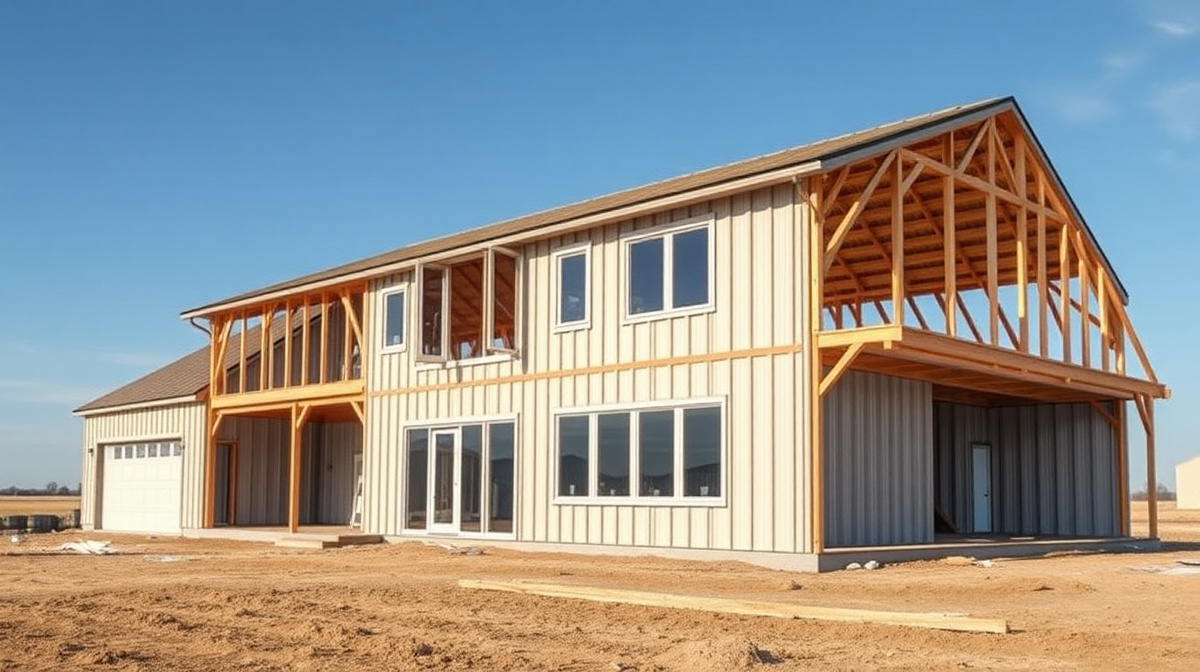
Building a Barndominium? How Construction Loans Work for Non-Traditional Custom Builds
Barndominiums and other non-traditional custom homes — post-frame or metal-building homes, shipping-container builds, and similar alternative construction methods — have grown a lot more common over the past several years. If you're planning one, the good news is that the underlying construction loan mechanics generally work the same way they do for a traditional stick-built custom home. The differences show up more in how lenders evaluate the project than in how the loan itself is structured.
The Mechanics Are the Same
A construction loan for a barndominium generally follows the same core process covered throughout this site:
- Funds are released in draws tied to inspected construction milestones.
- You typically pay interest only on the portion of the loan that's been drawn, not the full committed amount.
- The loan is either a construction-to-permanent structure that converts automatically at completion, or a standalone loan that gets paid off by a separate permanent mortgage after the build is done.
- Most lenders still require a licensed, bonded, lender-approved general contractor, unless you're pursuing an owner-builder program and can document relevant experience.
If you already understand how a traditional custom home construction loan works, you're most of the way to understanding how a barndominium construction loan works too.
Where Things Tend to Differ
The differences that actually matter for barndominiums and other non-traditional builds tend to cluster around two things: appraisal and lender comfort.
Appraisal comparables. Appraisers generally value a property partly by comparing it to similar recently sold homes nearby. In many markets, there simply aren't as many barndominium sales to compare against as there are for a traditional stick-built house — which can make the appraisal process slower or more conservative, and in some cases can affect how much a lender is willing to finance relative to total project cost.
Lender familiarity. Not every lender that offers construction loans is equally comfortable financing a metal-building or post-frame home. Some have specific experience and established programs for barndominiums; others may decline the project outright or apply extra scrutiny simply because it's outside what they typically underwrite. This varies a lot by lender and by region — areas where barndominiums are more common tend to have more lenders comfortable financing them.
Zoning and use classification. While not part of the loan itself, some lenders will ask early questions about whether local zoning and building codes clearly permit the intended use (residential barndominium vs. agricultural outbuilding, for example) — worth confirming with your local building department before you're deep into the loan process.
What This Means Practically
If you're planning a barndominium or another non-traditional custom build, the questions worth asking a prospective lender are largely the same construction-loan questions covered elsewhere on this site — draw structure, down payment, whether the loan converts or requires a second closing — plus a couple of extra ones specific to the build type:
- Have you financed this type of structure before, and how many times?
- How do you expect the appraisal to handle limited comparable sales in this area?
- Does your program have any restrictions specific to metal-building, post-frame, or container construction?
Asking these questions up front can save you from getting deep into the pre-qualification process only to learn a specific lender isn't a fit for your build type.
The Practical Takeaway
A barndominium construction loan isn't a fundamentally different financial product — it's the same draw-schedule, interest-only-build-phase, licensed-GC-required structure covered throughout this site, applied to a less conventional structure type. The friction, when it shows up, tends to come from appraisal and individual lender comfort rather than the loan mechanics themselves. Shopping multiple lenders with direct experience in non-traditional builds is generally the most reliable way to avoid surprises.
A note on accuracy: lender comfort with non-traditional construction types varies significantly by region and by individual lender, and changes over time as these builds become more common. Confirm directly with any lender you're considering before assuming they finance the structure type you're planning.
More Guides
How Draw Schedules Work on a Custom Home Build
A closer look at construction loan draw schedules — how milestones are set, how inspections work, and what can delay a draw.

Construction Loan vs. Traditional Mortgage: What's the Difference?
How a custom home construction loan differs from a standard purchase mortgage — funding structure, payments, qualification, and what happens at completion.
Ready to See What Building Could Cost You?
Tell us a bit about your project and where you are in the process — we'll connect you with construction-loan financing options and information suited to your build. Free, no obligation.